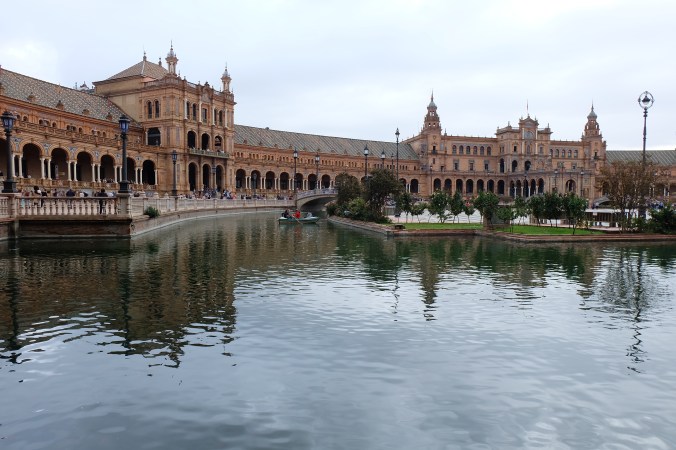
Plaza de España

When I first set foot in Seville, it immediately felt of its place.  That might sound a bit odd, but the narrow streets, the orange trees, the humidity, the scent it gave off… although I had never been here before, it was unmistakably Seville. Although all of the city that I was able to explore felt this way, one of the places I most wanted to visit, the Plaza de España, was so new relative to the historic city I wasn’t sure if it would have that same feeling.  Built in the late 1920s for the Ibero-American Exposition of 1929 and mixing a number of Spanish architectural styles, it felt like it had been here for centuries.

Plaza de España

Continue reading

Two churches in Seville

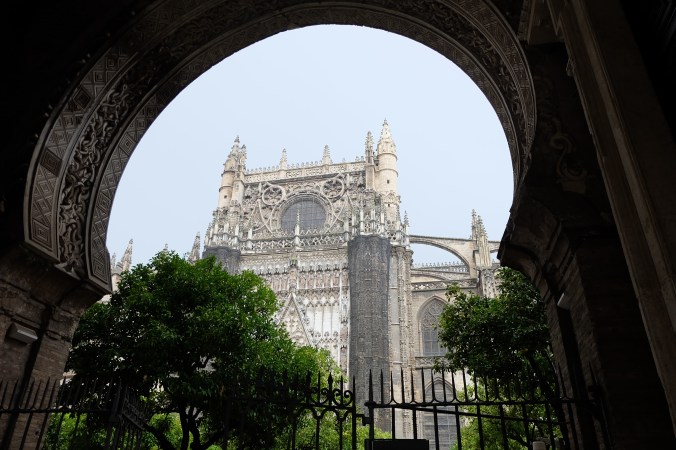
I’m not a religious person, but whenever I travel in Europe, I am always drawn to visiting churches.  Many times the social centres of cities are clustered around their most famous churches and religious sites, so it is hard to miss them.  And from an architectural standpoint, they usually form some of the most beautiful and picturesque locations.  In Seville, Spain, this was certainly the case.

The Seville Cathedral is the third largest church in the world, only behind St. Peter’s in Rome and the Basílica do Santuário Nacional de Nossa Senhora Aparecida in Aparecida, Brazil.    It is the largest Cathedral in the world as the other two are not the seats of bishops.   Size aside, it is striking from an architectural perspective inside and out.

Seville Cathedral

Continue reading

La Giralda: Seville from above

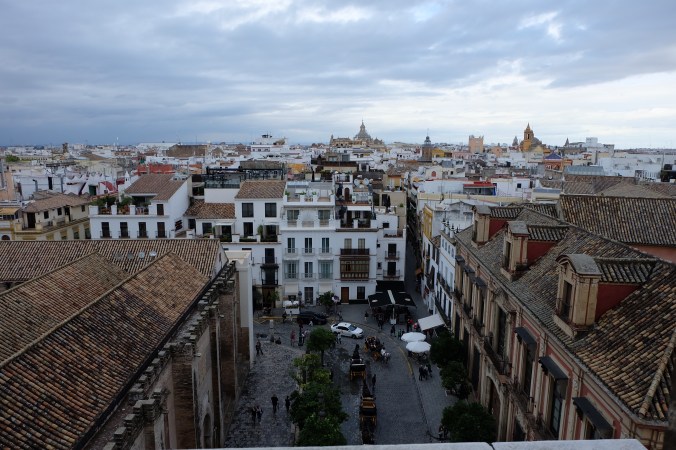
Seville is a stunningly beautiful city.  From the ground, especially in the Santa Cruz barrio, the tangle of streets and narrow lanes going in all directions makes for visual drama the likes of which I haven’t seen on my travels to date.  All those tight streets, though protection against the searing heat of southern Spanish summers, can leave you with a closed in perspective on the city.  To get above it, for a wider lens view of Seville, you have two primary choices – the Metropol Parasol, and for my money, the superior views from La Giralda, the bell tower of the Seville Cathedral.

After touring the cathedral on an on and off rainy afternoon, we scaled the tower just as some ominous clouds were approaching the city.  From about half way up the tower we could see there were only a few minutes until another downpour:

View from La Giralda, Seville

Continue reading

Living off tapas in Seville

In my perfect universe, every meal would be tapas style.  Small dishes, lots of sampling and experimenting, sharing – these form my idea of how to eat.  I’ve already written about a week’s worth of eating in Madrid where every single meal we had outside of our apartment was tapas style.  Well, we continued that trend for our time in Seville too.

On our third night in Seville, we started the night at Bar Alfalfa.  It’s a compact place with the noise of conversations filling the high, arching ceilings.  We were lucky to find a table along the windows on a rainy night.  The draw for us here was their gluten-free friendliness allowing my wife a few more ordering options than at other places.  That alone would put a smile on her face, but on this night, a man at the bar with his pet bird on his shoulder made her, and everyone smile:

Continue reading

Slowly becoming Sevillanos

Being in Spain last fall was a lesson in slowing down. Seville in particular was the perfect backdrop for a slower paced vacation. So while we made the rounds in Seville – a soccer match, some flamenco, the Plaza de Toros and the Metropol Parasol to name a few – a lot of my favourite memories are from fairly pedestrian activities and from just savouring being in Seville.

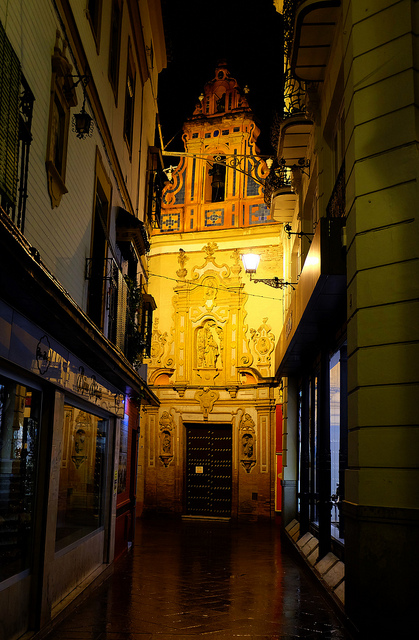
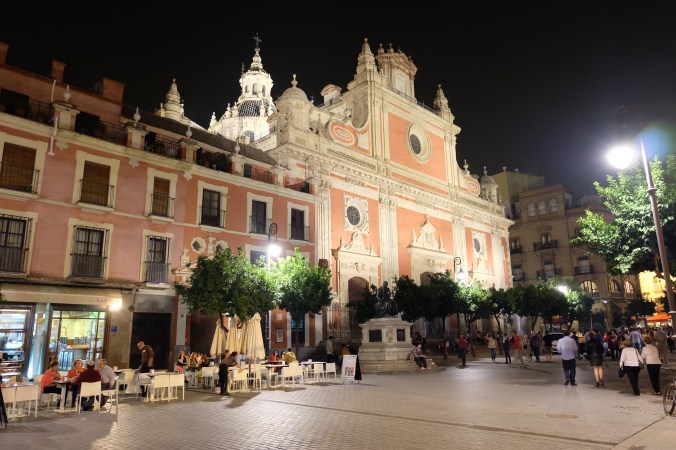
On our first night in the city, after leaving a flamenco show, we swung by our apartment, picked up some drinks and snacks, and headed for the Plaza del Salvador.

Iglesia del Salvador

Continue reading

Late night soccer in Seville

When you think of Spain it doesn’t take too long going down the list of cultural touchstones until you reach the beautiful game.. fútbol.  So while I would want to go to a match simply for the pure enjoyment of watching the sport, I also wanted to experience this important Spanish slice of life while I was in Seville.

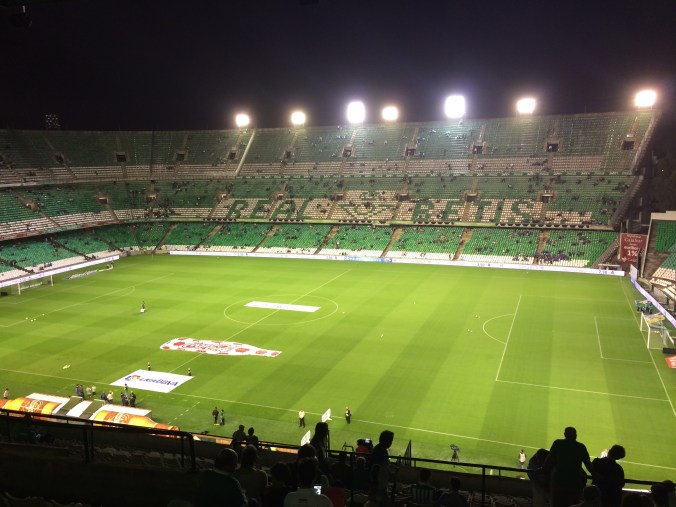
The city has two teams – FC Sevilla, the more accomplished and decorated side, and Real Betis, the city’s “second” team that has struggled throughout its history.  Real Betis is known to have some of the most loyal supporters in Spain, even drawing huge crowds when they bounce down to the country’s second division, a place they were as recently as the previous season.  But this year, they ascended back into La Liga, and on a Saturday night in October, were taking on RCD Espanyol.  With a little help from our Airbnb host back in Madrid, we obtained tickets for the match, and were among the first people through the gates when they opened at the Estadio Benito Villamarín.

Inside Estadio Benito Villamarín in Seville

Continue reading

Las Setas de la Encarnación

After visiting the world famous bullring, the Plaza de Toros, the next stop on our first afternoon in Seville was decidedly less steeped in history and tradition.  In fact, Sevillanos are split in their opinion of the newest architectural icon in the city: contemporary artistic landmark or unsightly blight crammed in alongside traditional centuries-old buildings.   Me?  I loved it.   

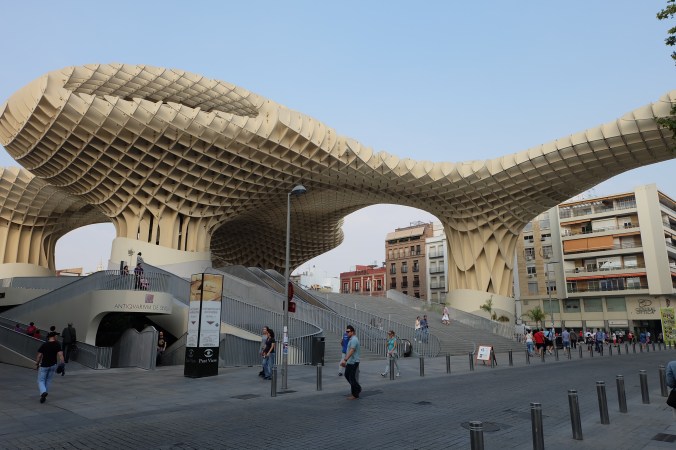
The Metropol Parasol is known locally as Las Setas de la Encarnación: the “mushrooms of Encarnación” on account of the six parasols of the structure resembling giant mushrooms. Back in 2004 the city of Seville decided to redevelop a public square which had sat dormant since the mid 1970s.   Designed by German architect Jürgen Mayer, one of the main design ideas behind the structure was to create shade, a precious commodity in Seville.   The structure is the world’s largest made of wood to be held together by glue.  Yes, glue.

Metropol Parasol in Seville

Continue reading

Bullring or bullfight

Prior to our trip to Spain, I really struggled with the question of whether or not to attend a bullfight.  We had a chance to see a major end of the season event in Madrid, and when I travel, I’m usually all in to experience a slice of unique culture.  On one hand, bullfighting still holds a special place in the hearts of many in Spain. This was a chance to see something truly Spanish, and at its most prestigious and highest level. Part sport, part art, part spectacle, there was something very appealing in an opportunity to experience this part of the world through an event so entrenched in its culture, even if it may not appeal to my Canadian senses. But on the other hand, I love animals (though, conflicted, still eat them) and don’t think I could bear watching six bulls be killed over a two hour period.  It was a once in a lifetime type opportunity, but I wasn’t sure I had the stomach for it.

A few weeks before leaving, I decided against seeing the bullfight (to the telling relief of everyone who knows me well), and opted instead to visit the Plaza de Toros de la Real Maestranza de Caballería de Sevilla to see one of the most decorated bullrings in the world.   Shortly after arriving in Seville by train from Madrid, my wife and I walked up to the gates of the Baroque styled amphitheatre and purchased tickets for one of the scheduled tours.
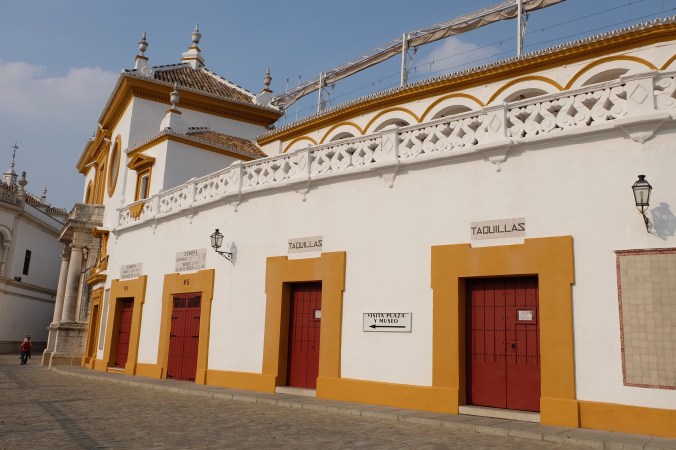
Plaza de Toros in Seville

Continue reading

Searching out craft beer in Spain

Spain and craft beer.  Not two concepts that you’d immediately place together.  In tapas bars in Madrid and Seville, there would always be one tap, and ordering a beer meant having whatever brand was flowing.  Not that this was a bad thing.  The beer was always ice cold, and while eating salty olives, perfectly sliced ham, or any of the other culinary staples in Spain, it made for a great pairing.   Thirsting for something a little different, over two weeks in Spain, I had a few opportunities to dig a little deeper for a beer culture that is emerging, if still at the fringes.

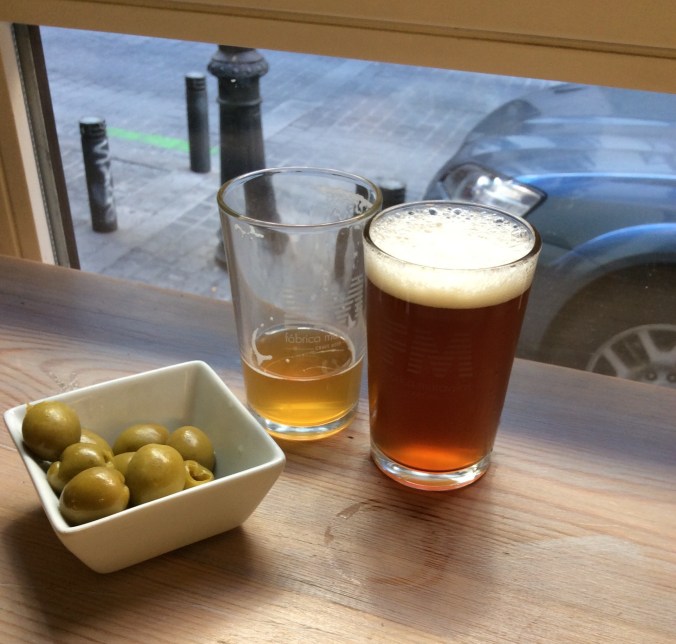
Thanks to an article by the wonderful travel blog, Bite-Sized Travel (written by a fellow Haligonian!) I was inspired to chart a course of a few craft beer locations and beers in Madrid, Seville and Cordoba.   My first stop was Fábrica Maravillas, less than a 5 minute walk north from the Gran Via metro.  It’s a brewery in the back, small pub in the front kind of place.  I tried two of their beers – the Malasaña (left; named after the neighbourhood in which the brewery is located; a well-balanced American-style piney IPA) and a bitter (right; light and easy drinking).  This was also the start of my love affair with the plump, salty olives of Spain.   The only thing missing from this visit was the pub’s resident pug, who, if he was around, may have enticed me to stay for a third or fourth beer.

Afternoon drinks at Fabrica Maravillas

Continue reading