Prior to our trip to Spain, I really struggled with the question of whether or not to attend a bullfight. We had a chance to see a major end of the season event in Madrid, and when I travel, I’m usually all in to experience a slice of unique culture. On one hand, bullfighting still holds a special place in the hearts of many in Spain. This was a chance to see something truly Spanish, and at its most prestigious and highest level. Part sport, part art, part spectacle, there was something very appealing in an opportunity to experience this part of the world through an event so entrenched in its culture, even if it may not appeal to my Canadian senses. But on the other hand, I love animals (though, conflicted, still eat them) and don’t think I could bear watching six bulls be killed over a two hour period. It was a once in a lifetime type opportunity, but I wasn’t sure I had the stomach for it.
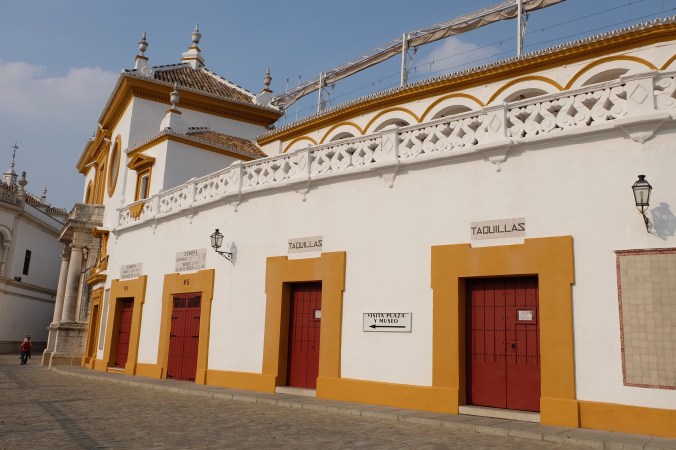
A few weeks before leaving, I decided against seeing the bullfight (to the telling relief of everyone who knows me well), and opted instead to visit the Plaza de Toros de la Real Maestranza de Caballería de Sevilla to see one of the most decorated bullrings in the world. Shortly after arriving in Seville by train from Madrid, my wife and I walked up to the gates of the Baroque styled amphitheatre and purchased tickets for one of the scheduled tours.
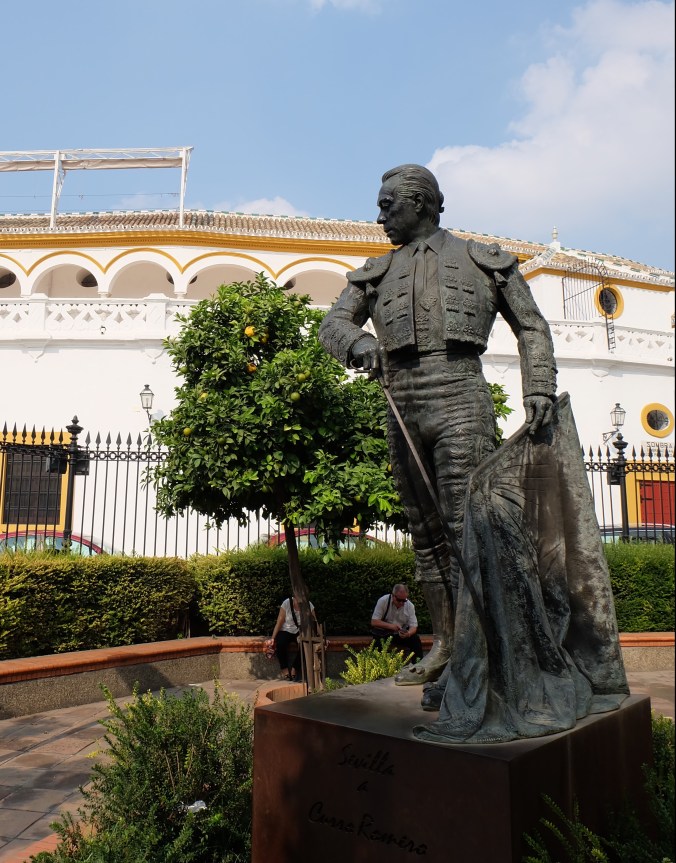
While waiting for the tour to start, we stopped to visit the statue of Francisco Romero López, a famous torero from Seville from the 1950s until the late 1990s. I came to learn during the tour that bullfighters are really the rock stars of Spain and are held in virtually the same regard as the top footballers of the country.
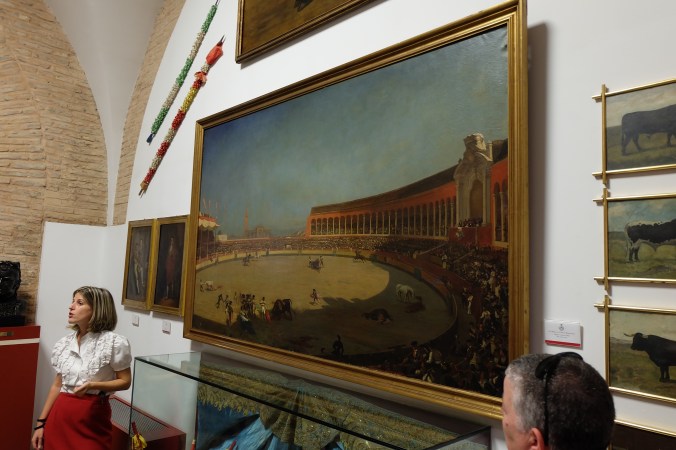
The tour was an efficient 45 minute affair that started off in the small but well decorated museum to bullfighting in Seville. In the museum there are numerous paintings commemorating bullfighters, some of the most prized bulls and a collection of artist renderings of the bullring itself through the years.
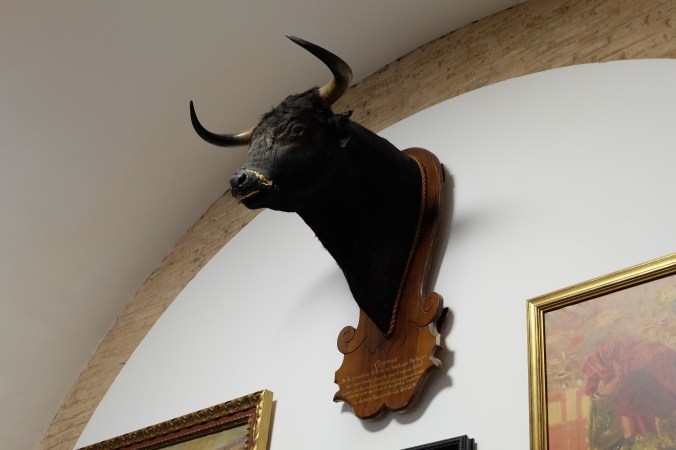
Some of the most famous bulls line the walls. We learned that over the more than 200 year history of bullfighting in Spain, only one adult bull has ever been granted indulto (a pardon) with its life being spared on account of exceptional bravery during the fight. In 2011, the bull Cuvillo Nunez was spared at the end of his fight on decree of a member of the Spanish Royal Family in attendence.
The Plaza de Toros in Seville is the oldest bullring in the world, dating back to 1785. It has been modernized with additional stands added through the years, but sitting on the benches looking over the empty ring, it wasn’t hard to conjure the history of this place in my mind. If I squinted a bit and let my mind drift, I could imagine 14,000 people filling the rows to take in a traditional afternoon of six fights.
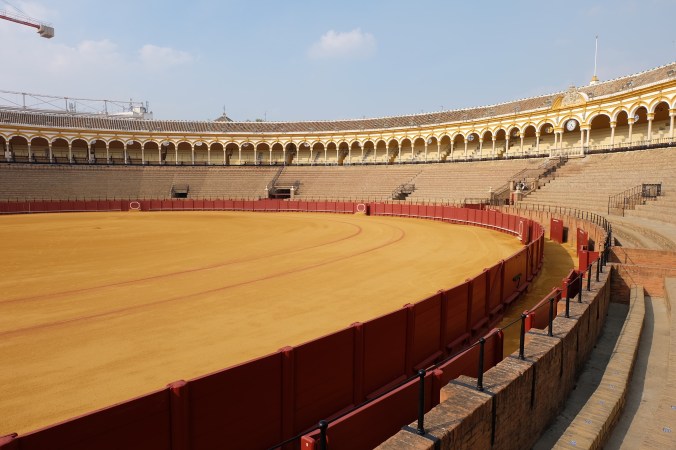
The box dedicated to the Spanish Royal Family was undergoing some renovations while we were there. They certainly get the most prime seats in the entire place. Shade is at a premium during bullfights in the extraordinarily hot Seville summers.
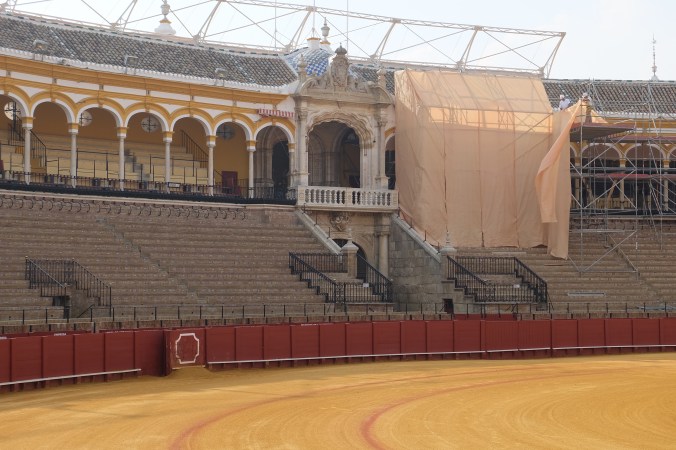
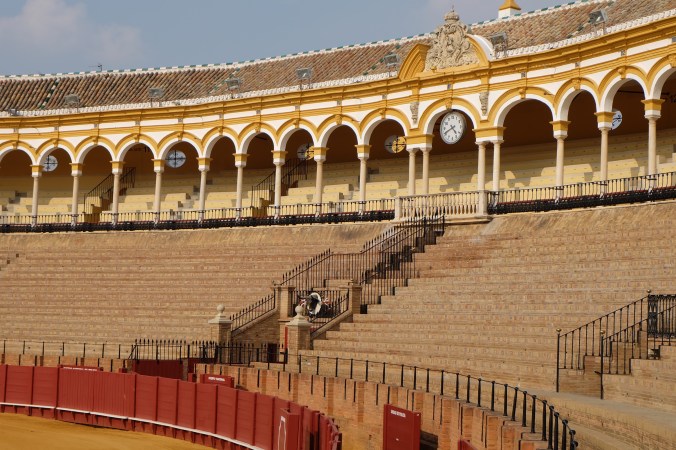
If you had dropped me here and asked me where I was, there’s a reasonable chance I’d have been able to tell you I was in Seville. The arches, the yellows and whites on the woodwork and the style of the shingles all give a definite sense of place. The Plaza de Toros is a stunningly beautiful theatre.
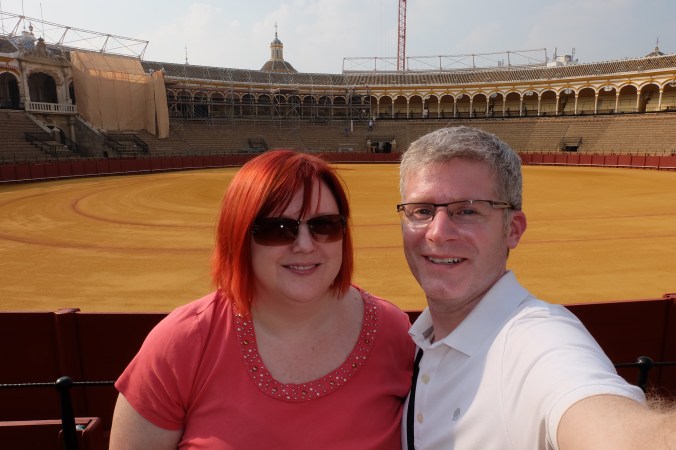
Before continuing on with the tour, we stopped for a quick picture with the ring behind us.
Next up on the tour was a visit to the chapel where the bullfighters pray in advance of their fights. As a matador readies himself to do a delicate dance with an angry 500kg animal, every little bit of extra protection helps.
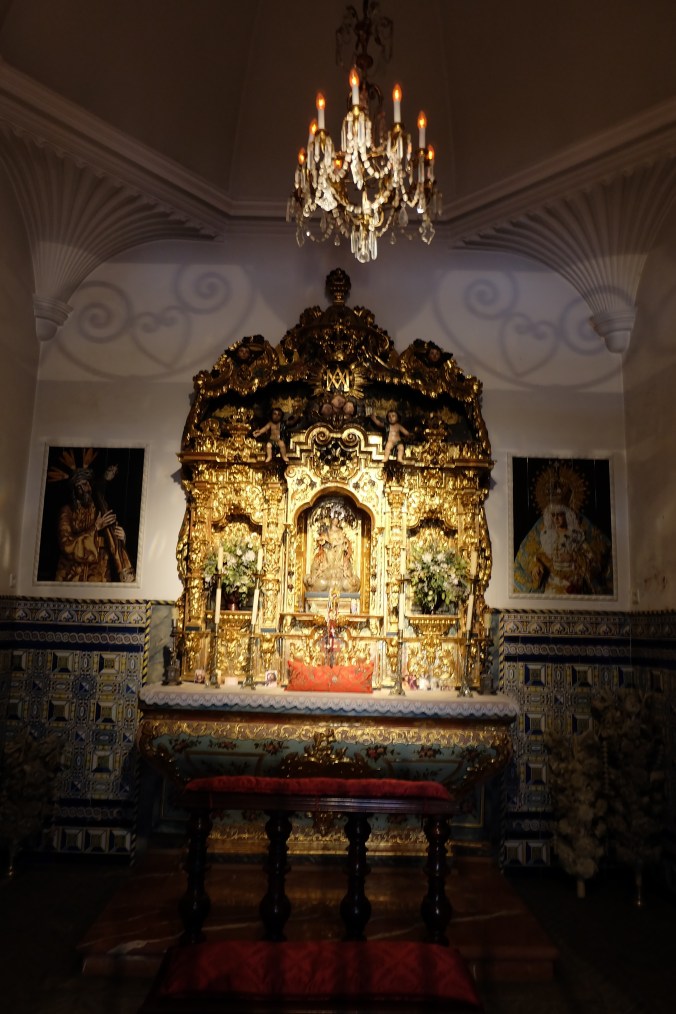
Although we didn’t get to see it, a number of bullfighters have to visit the onsite hospital after a fight for emergency procedures. And to think, as Canadians, we feel hockey is tough. Matadors are a whole other level of tough, even while looking resplendent in their traditional dress, the traje de luces (suit of lights).
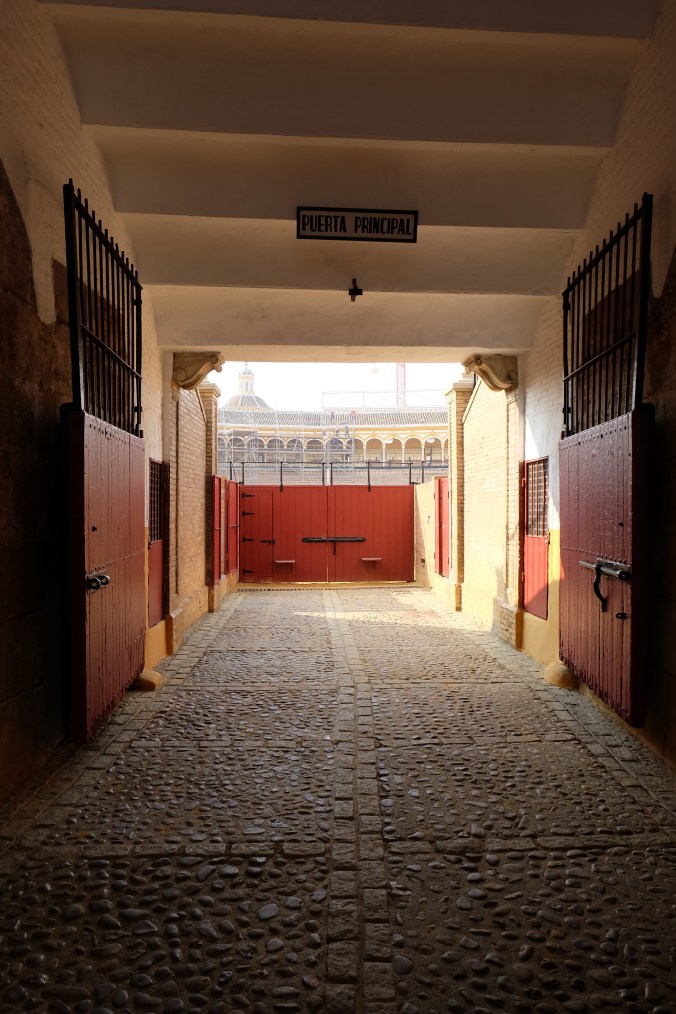
Here is the view a bullfighter would have before entering the ring. This is just outside the chapel, and on the other side of that red gate is the ring. I can only imagine what must go through the mind of a matador as he stands here.
In looking back on my time in Spain, I’m glad I made the choice I did. I don’t think I would have had the stomach to watch a succession of bullfights. But visiting this historic bullring gave me a chance to see and learn about an important slice of Spanish culture.
 Bluenose Traveler
I love spain! I have to see this one day
Check out my blog when you get the chance 🙂
I will! Saw you’ve written a bit about Miami. I’ve been thinking about a trip in that area over the next year or so
You should go over there. It is an amazing american city. Even though it feels like latin america
Great Post.
Great choice!
Pingback: Las Setas de la Encarnación | Bluenose Traveler
Pingback: Slowly becoming Sevillanos | Bluenose Traveler
The bullfighters choose their ‘sport’, the poor bulls have no choice and suffer hideously being chemically blinded, drugged and tortured first they have no chance unless they are ‘pardoned’, for what, god knows.
I agree, which is why I ultimately decided against attending (and am very glad I made that decision)